Showing posts with label WhatsApp. Show all posts

A Year Later, $19 Billion For WhatsApp Doesn’t Sound So Crazy

(GNN) - Messaging is the center of mobile. Snapchat is raising at around a $20 billion valuation. And no one cares who owns apps. On February 19th, 2014, we didn’t know any of these things for sure. So when Facebook announced it would pay $19 billion to acquire WhatsApp — an app most American pundits had never used — it seemed ludicrous. Zuck had to be crazy, right?

Wrong.

Without WhatsApp, Facebook’s international situation would look a lot dicier. And if a competitor like Google acquired it instead, it could have been disastrous.

Instead, Facebook possess the most popular messaging app, and has neutralized the biggest threat to its global domination of social networking.

Why?
Chat Is The Mobile Portal

No apps get opened as often as messaging apps. While you might spend longer in total scrolling through Facebook, Instagram, Twitter, or Pinterest, the frequent short sessions with chat apps make them a vector for other experiences. That means they’re more valuable than they might first appear.

How do you monetize chat? It’s a tough question. Sure there’s stickers, but there’s too much competition to charge much upfront for an app and its too interruptive to show ads. But platforms, hubs, portals — whatever you want to call them — hold plenty of opportunities to cash in.
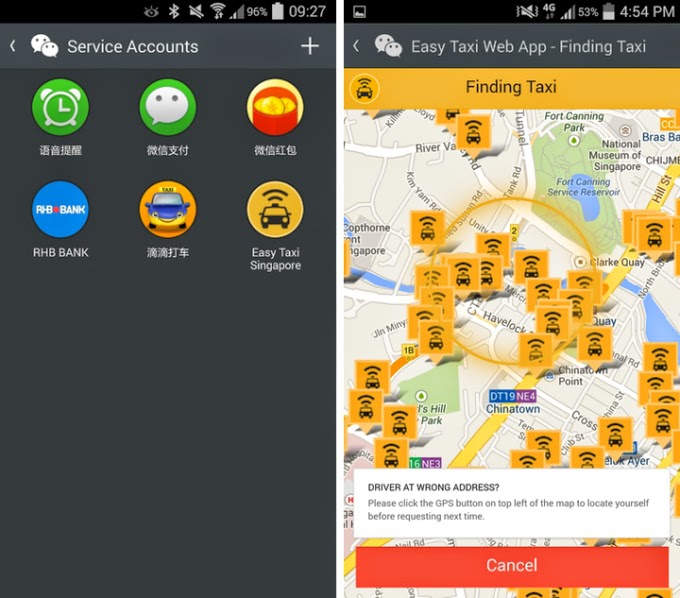
The messaging apps from Asia are proving this as we speak. China’s WeChat also lets you call a taxi, pay friends, search, shop, buy movie tickets, and more. Japan’s Line hosts Line Pay, Line TV, and an identity platform for games. Why fumble with a bunch of different apps, passwords, and payment methods when you can do it all while you chat?
Even Snapchat is expanding far beyond messaging. Its Stories product for broadcasting sequences of photos and videos is a hit with star content creators. Its Snapcash feature lets you quickly pay friends through Square Cash. And its new Discover portal collects Snap-formatted content from premium producers like Comedy Central, CNN, ESPN, and Vice.

A lot of critics wondered how Facebook could earn money from messaging on WhatsApp, considering it’s vowed not to show ads and only charges its skimpy $1 subscription fee in a few markets. The answer is it doesn’t have to. By taking a cut of commerce, or charging for promotion of content, it could keep chat lean and clean while monetizing other parts.
It Missed The Boat On Snapchat

Facebook famously offered to buy Snapchat for somewhere around $3 billion. With 20/20 hindsight, we know that was a short-sighted low-ball. Snapchat rejected the offer, and all of Facebook’s efforts to clone it since have failed spectacularly.

Snapchat CEO Evan Spiegel laughs it up

Now Snapchat is trying to raise around $500 million at a $20 billion valuation. Its Stories feature has grown into a competitor to Facebook’s News Feed. And Discover could make it all quite monetizable if it gets popular. Snapchat is constantly cited as where teens are ditching your parents’ social network for.

Snapchat has become one of the banes of Facebook’s existence, and I’d imagine Facebook wasn’t willing to let it happen again abroad. So rather than trying to pay what WhatsApp was worth a year ago, it resigned to pay what it may be worth one day.
Parent Companies Don’t Matter

Whenever a tech giant buys a popular startup, there’s always some immediate backlash from users, and worries that people will jump ship. But time and time again, we’ve seen that if the acquired startup is allowed to run at least-somewhat independently and can simply carry on its mission with more resources, fans stay loyal.

Instagram had around 30 million users when Facebook bought it $1 billion. Now it has over 300 million users and Citigroup values it at $35 billion.
Some Kickstarter backers and early developers moaned when Facebook acquired Oculus. But it’s since flourished into the premier virtual reality platform. CEO Brendan Iribe told me the acquisition helped by boosting confidence of big devs because they knew Oculus wouldn’t run out of money and shut down.

The Parse developer platform has grown from 60,000 apps to over 500,000 since Facebook bought it. Flurry flourished with Yahoo. Twitter’s ownership didn’t deter people from Vine.

Facebook buying WhatsApp wasn’t going to ruin it, and it didn’t. It’s kept growing from 450 million monthly users a year ago to 700 million last month.
The Scary Alternative

More risky than Facebook not buying WhatsApp was what would happen if a competitor did.

Most obviously, Google could have used WhatsApp to jumpstart its late-to-the-game Hangouts messenger. Suddenly, Facebook would be battling a deep-pocketed competitor to replace SMS as the way the world chats.

Without it, Google has seemingly surrendered in the messaging war. Since WhatsApp runs independently, Facebook has been able to focus on its Messenger app in its home market, which has risen to a 500 million users.
WhatsApp has achieved massive popularity in the developing world where SMS fees are hard to swallow. That’s because discretionary income is less common, which also makes monetizing these users with ads difficult. That’s a problem for Facebook that WhatsApp can help solve. Through mobile payments that are widespread in places like Africa, WhatsApp could monetize where it’s tough for its parent.

And whether it stayed independent or sold to someone else, WhatsApp could have challenged Facebook’s iron grip on social networking. It’s not just chat. WhatsApp offers a status update feature reminiscent of AOL Instant Messenger’s away messages. But if you squint, those statuses look quite similar to what people post to the Facebook feed.

Since messaging is the core feature of mobile, WhatsApp could have wedged its way into becoming a full-fledged social network starting with statuses.

We won’t know for sure until WhatsApp starts bringing in serious revenue. But in the age of the desktop web, AOL and Yahoo grew huge by using their frequent use to become the portals to everything else. Messaging apps are the portals of mobile, and Facebook owns the biggest one.

Crazy like a fox.

Blinq Enhances Your Favorite Messaging Applications With Extra Information

(AsiaTimes.ga/Tech) A new mobile application called Blinq is launching today into public beta to add a layer of contextual information to your favorite mobile messaging applications. Founder Yossi Ghinsberg, who’s better known for his adventures in the Amazon (not Amazon.com, but the actual unchartered wilderness), described Blinq as “more of a hack than an app,” saying that people are tired of trying yet another mobile application. Blinq offers something different, he says.

Instead of delivering a full mobile app experience you launch by tapping an icon, Blinq is designed to augment the apps you already use. Your normal behavior doesn’t have to change.

Once installed, Blinq appears as a small white dot that pops up inside mobile messaging apps like Facebook Messenger, Whatsapp, Hangouts, Skype, and SMS, for example, alerting you to new information about the person you’re communicating with. This additional information is pulled from a variety of other networks, including Facebook, Twitter, LinkedIn, Instagram and more.

Blinq shows you status updates, photos and other recent activities, but its algorithms focus on highlighting the more important content. That is, if your friend recently posted two updates, one about what they had for lunch that day and another, more heavily liked update about a major life event, Blinq would only alert you to the latter.

The idea for the app, explains Ghinsberg, stems from his longtime interest in the concept of digital identities. He found that information about people was scattered around the web, and it was hard to access it when you needed it.

“We’re looking at the integrated, whole person instead of the fragmentation that’s caused because of the different platforms, the different channels and the different networks,” he says.

After teaming up with a technical co-founder Gal Bracha in 2013, the two first experimented with a larger solution, but realized soon that what they had built was too complicated and required that people change their habits. That didn’t work.

Right as they were accepted into the 500 Startups accelerator program, the team pivoted to build Blinq instead.

“We took the big idea, and reduced it,” says Ghinsberg. “Blinq is just a small white dot.”

While the app itself is consumer-facing, the concept could also work in business use cases where it could serve as something like a lightweight CRM tool. In that case, it wouldn’t be all that different from something like Rapportive or FullContact’s solution for Gmail. Those add-ons also aggregate content from a variety of networks in order to include personal and business information alongside social updates in Gmail’s sidebar.

Blinq just does this for mobile messaging apps.

The app that’s live today on Google Play is more of an MVP, meant more to test the how the market responds to the idea, the founder notes. That means the app may be buggy, and Blinq’s servers might be slow at times. But if successful, Ghinsberg says that the concept could be ported to other services beyond messaging.

Since its debut a couple of days ago, the company’s servers have imported over 250,000 contacts, and overnight, added half a million more followed by another million just last night. The team hasn’t publicized the app yet, but it has a few thousand downloads already.

The plan is to port the Blinq experience to iOS in the future, but there, the app will likely have to make some changes. Today on Android, the app works at the notification level, and is more deeply integrated. iOS, by its nature, will require more of a standalone experience, though Ghinsberg says he has some ideas about how to work around that.

Blinq has raised just under half a million in an advisory round from angel investors and 500 Startups, but will be looking to raise a million more starting next month.

The Most Important M’s In M-Commerce

#GNN - Editor’s note: Phil Carter is an associate at Trinity Ventures, where he focuses on early-stage consumer technology investments particularly in mobile-enabled marketplaces and services.

A few customer groups are driving a disproportionate share of growth in smartphone use and mobile transactions. For entrepreneurs looking to build the next billion dollar m-commerce company, it pays to understand who these groups are, what their mobile activity looks like, and how to best serve them. When it comes to finding customers in mobile commerce, remember the Three Ms: moms, millennials and multinationals.

Moms
Moms are a great consumer demographic, accounting for more than 70 percent of U.S. household spending according to a 2009 survey by Boston Consulting Group. Moms are also smartphone power users. According to Edison Research, 64 percent of moms owned smartphones in early 2013 vs. just 53 percent of the general population.

The same study indicated moms spend an average of 8 hours and 37 minutes a day with media, 89 percent of moms report having their smartphone within arm’s length always or most of the time, and 42 percent of moms say their smartphone is the first thing in their hand every morning. The combination of moms driving a large majority of U.S. spending and being highly engaged smartphone users makes them the single-most powerful constituency driving m-commerce today, particularly in the retail enablement, mobile retail, marketplace, and on-demand service categories.

Today, mothers tend to be constantly juggling activities, so whether your app is selling a product or a service, make her life simpler with a friendly user interface that she can navigate easily. Companies like Houzz and Wanelo do a great job of this with their mobile apps.

Entertainment and gamification also work well. Dot&Bo increases shopper engagement and spend by wrapping a story around every piece of furniture and home décor it sells. Meanwhile, Zulily boosts loyalty and retention by personalizing a mom’s shopping experience and rewarding her with discounts for buying within a specified window of time.

Finally, be respectful of her time and space. A mom has enough on her mind without your app constantly pinging her with push notifications, so make sure you build intelligence into your app so that you’re tailoring engagement to her unique rhythms.

Millennials
If it wasn’t obvious that today’s teens and twenty-somethings spend a lot of time on their smartphones, then a recent ComScore study makes it clear. According to ComScore’s data, 81 percent of U.S. Millennials (defined as 18-34 year olds) owned a smartphone by the end of 2013 vs. 68 percent of 35-54 year olds and 40 percent of the 55+ population.

Furthermore, 85 percent of millennials consume digital media on mobile versus 80 percent of 35-54 year olds and 58 percent of the 55+ population, and 18 percent of millennials are mobile-only, meaning they do all their Internet browsing, emailing, social networking, and news reading on a smartphone or tablet. That’s 3.5x the percentage of 35-54 year old mobile-only users and 6x the percentage of 55+ mobile-only users. millennials are driving growth in several App-Based Service categories like dating and fitness, and are also an important force in mobile retail, particularly teen and college-age women who spend a lot of disposable income on apparel, accessories, and beauty products.

Today’s teens have increasingly short attention spans, so to capture share of mind and wallet with this valuable demographic, an entrepreneur must first capture their imaginations. According to the National Center for Biotechnology Information, average attention span dropped 33 percent in the last decade from 12 seconds in 2000 to 8 seconds in 2013.

Apps targeting teens and twenty-somethings must demonstrate value quickly to gain acceptance, so skip the long onboarding process in favor of Facebook Connect or throw it out entirely and immerse users in your app’s experience from their very first click. Millennials are also hyper visual, as proven by the success of social apps like Snapchat, Instagram and Whisper.

A picture is worth more than a thousand words because the average teen will only read the first 10. Finally, teens operate on smaller budgets, so make price points accessible to convert shoppers into buyers.

Multinationals
According to data collected last year by Statista, the U.S. ranks 13th in smartphone penetration globally. The four countries topping this list – United Arab Emirates, South Korea, Saudi Arabia, and Singapore – are all from the Middle East or Asia. Meanwhile, a recent Pew Research Center report highlighted an explosion of mobile payments in Sub-Saharan Africa, where a much higher percentage of mobile users (as high as 68 percent in Kenya) report regularly using phones to make or receive payments vs. a median of just 8 percent in other countries surveyed.

Outside of traditional m-commerce, social messaging apps are booming in Southeast Asia where WhatsApp competitors Line, Kakao, and WeChat have accumulated hundreds of millions of registered users. The lack of a large installed base of PCs has allowed mobile penetration in many developing nations to outpace penetration in more industrialized parts of the world. This trend, paired with rapidly-rising GDPs among the BRIC nations (Brazil, Russia, India, China), Asian Tigers (Hong Kong, Singapore, South Korea, Taiwan), and parts of the Middle East and Africa, indicate it’s only a matter of time before the global share of m-commerce shifts increasingly abroad, particularly in categories like Mobile Payments, Mobile Retail, and Marketplaces.

It’s difficult to prescribe a list of winning m-commerce strategies for multinationals because they exhibit fewer consistent patterns than moms and millennials, but a couple general principles are transferrable. First, know the cultural context you’re operating in. Digital goods may be a great monetization mechanic in Southeast Asia but not in other countries where there’s no cultural basis for valuing these items. Second, if you’re expanding an app outside its native market, localization matters.

Even if all your users understand English, you’ll need to adapt your messaging to build emotional attachments. Crowdsourcing can be a powerful solution for this problem, as Facebook famously demonstrated when it designed a tool to let users translate its platform into their native language. Finally, in markets without significant PC penetration, mobile-first design principles are even more important, as many users will be mobile-only.

Moms, millennials, and multinationals certainly aren’t the only groups driving m-commerce. In today’s increasingly mobile world, smartphone penetration and usage is increasing across nearly every demographic. However, for m-commerce entrepreneurs looking to build the next big thing, targeting at least one of the three M’s represents an effective strategy for establishing a core of highly-engaged early adopters.

Moms and millennials also tend to be above-average users of social media, creating greater potential for organic user acquisition and viral growth. Given how important moms, millennials, and multinationals are within the m-commerce ecosystem, understanding their usage behaviors and meeting their needs can be the key to building a great business on mobile.

Disclosure: Trinity Ventures is an investor in Dot&Bo, Zulily, and Whisper.

IMAGE BY SHUTTERSTOCK USER PCRUCIATTI (IMAGE HAS BEEN MODIFIED)

Software Entrepreneurs Must Go Mobile-First Or Die

Editor’s note: Roger Lee is a general partner with Battery Ventures.

Seven years ago when the iPhone was first introduced, smartphones were a novelty. Now they’re the default method of computing for most people. As of late last year, Americans spent 34 hours a month on their mobile devices, compared with just 27 hours accessing the web via a computer, according to Nielsen.

This mobile-first mindset has also deeply permeated the enterprise. Some 95 percent of knowledge workers own smartphones, and they reach for them first to do all kinds of tasks – from email and document sharing/management to meeting planning and videoconferencing.

Smartphones and tablets are also rapidly entering business sectors such as construction, shipping, manufacturing, healthcare, real estate, education, law enforcement, fleet management and others. Most people have noticed field workers using mobile devices equipped with industry-specific apps (everyone from rental-car agents to home contractors) to complete tasks on the go.

As Salesforce.com CEO Marc Benioff recently said at a technology conference: “Today I run my business from my phone; I could never have imagined that a few years ago.”

So for enterprise software entrepreneurs, this platform shift has massive ramifications on product roadmap, product design, hiring, go-to-market strategy and pricing.  In other words, it impacts everything.

If you’re building an enterprise-software company, mobile must be core to your product strategy; it can’t be an afterthought or add-on. And you must build an elegant, easy-to-use mobile app, because employees and consumers far prefer mobile apps to mobile websites. U.S. smartphone users spend 86 percent of their time on mobile apps, vs. 14 percent of their time using mobile browsers.

Mobile-first
One example of an enterprise startup getting it right with mobile is Clari, a CRM software company. At right, a screen shot of the clean, great-looking Clari Daily Brief – perfect for a sales rep on the go whose smartphone is his or her primary computing device.

There’s also PagerDuty, a company that alerts IT professionals to potential problems via SMS and email. Also in the market is CoTap, a mobile-first messaging system for workplace teams—sort of like WhatsApp for business.

These companies and others illustrate a few key precepts that entrepreneurs should keep in mind when trying to build a mobile-first product and mobile-centric company culture.

Pick one platform to get product/market fit. iOS and Android are very different environments and, as a resource-constrained entrepreneur, you need to pick one. Be conscious of the types of devices your end customer will be using and think through the pros and cons of each platform (e.g. Android is easier to release/iterate in the early days as you are searching for product/market fit, while iOS can be easier to monetize). Once you have made your platform decision …

Hire dedicated developers for that platform. You will need a dedicated team of three to four engineers/designers for either iOS or Android. These folks are tough to find, but you don’t have a choice. To build an A+ mobile app, you need a dedicated team that is solely focused on building in iOS or Android.

Design, design, design. You only have a few minutes to convince users your mobile app is valuable. If they have to spend 2-3 minutes struggling to understand how to use it, you’ve likely lost them for good. A great mobile app is intuitive from the first minute a user taps on it. But designing something so elegant is extremely difficult. You need great designers and lots of them. Make sure an experienced designer is one of your first few hires, or ideally part of the founding team. Then, aim to hire one designer for every three to five engineers going forward.

Think through workflow and how it impacts the user experience. This is stating the obvious, but the way people use smartphones and tablets is vastly different from the way they manipulate keyboards and mice. Instead of relying on clicks and text entry – the standard for enterprise desktop apps for decades – you’ll need to design mobile workflows based on taps and swipes. Depending on your mindset, this can be either scary or liberating. Embrace this design constraint and you will be surprised at what is possible.

Don’t overbuild. Another key to success with mobile apps is to keep it simple. Don’t build in too much functionality, and make sure the user can get real value within three to four swipes/taps. Most incumbent software vendors have not figured this out, as they take their year 2000-era software playbook and cram in too much functionality, yielding a bloated and difficult-to-use product. Don’t fall into that trap. Keep it simple.

Decide if your app plays a standalone or support role. Just because people vastly prefer to use smartphones over their PCs doesn’t mean there aren’t some work tasks that still require a computer. Startups like Accompani are getting this balance right. The company, which makes relationship-management software, can fulfill on-the-go use cases over customers’ mobile devices but accomplish batch-processing type tasks — clearing out your inbox, prepping for the next day full of meetings — on a PC or tablet. 

After all, programming, graphic design, writing, creating presentations and other jobs are still mostly done using keyboards and large screens. Figure out if your mobile enterprise app is for a task that never, ever needs a computer, or conversely, if it needs to work in conjunction with a desktop application. Everything from how you design the mobile app interface to whether you need mobile-desktop sync will depend on this critical distinction.

Even if you didn’t start your company as a mobile-first business, there is still time to make this massive pivot. Facebook did it – moving from a consumer, desktop-based website to a mobile-first app – and changed its entire revenue stream in the process. If a huge company like Facebook can do a mobile about-face, your smaller enterprise software startup can, too.

You just have to throw out all your old ideas about how users interact with your software and put all your energy into designing a streamlined, elegant, efficient mobile app. It won’t be easy, but it has to be done. Otherwise, your enterprise software company may slowly fade away as a relic of the bygone desktop era.

BlackBerry Is One Of The Hottest Stocks Of 2014, Seriously

Don’t look now, but BlackBerry, you know, the butt of most cell phone jokes, is mounting an impressive comeback. BlackBerry’s stock (NASDAQ:BBRY) is up 50% on the year and one of the best performers in its sector.

BlackBerry has been written off as dead countless times. The company is often viewed as a relic of a bygone era. Its CEO is a blowhard, not afraid to take spats with the company public. Yet the company is creating value for its shareholders.

In 2014 BlackBerry’s stock is outperforming all its peers. At the beginning of the year, the company’s stock was languishing at $7.44 a share. Yesterday it closed at $11.21. That’s a gain of 50% on the year. The stock is also up in trading today.

Apple is up just 20% on the year. Google? Just 5%.

The Motley Fool recently looked at the company’s financials and caution the company has yet to improve its revenue growth or its profit margin. The company is simply slashing costs and not making waves. So far, investors are liking that approach.

The company is also making some strategic moves. BlackBerry has leveraged its established Messenger app, positioning it as a WhatsApp for the lucrative enterprise market.

The company also released minor updates to its BB10 mobile operating system and turned to niche and developing markets for additional handset sales.  Essentially, by not doing a lot this year, BlackBerry hasn’t done anything wrong. That could change.

The company’s long-term future is still in question. Its mobile market share is still shrinking and Apple and Android makers are increasingly adding features once exclusive to BlackBerry devices. If BlackBerry is to remain the company will need to do more than cut cost and add stickers to BBM.