Showing posts with label Monday. Show all posts

Crews make headway against destructive Northern California #wildfire

#GNN - #Firefighters began to gain the upper hand on Monday against a Northern California wildfire that has destroyed 13 homes and blackened nearly six square miles in the drought-parched foothills east of Sacramento, officials said.
Crews had built containment lines around roughly two-thirds of the so-called Sand Fire as of Monday morning, up from only 35 percent on Sunday evening, the California Department of Forestry and Fire Protection said.

Some residents who were forced to flee their homes ahead of the flames, were allowed to return on Monday.

But CalFire cautioned that the blaze was still burning in steep, dry terrain that made fighting it more difficult and that they didn't expect full containment until Friday.

The Sand Fire, which erupted in the Sierra Nevada foothills east of Sacramento on Friday, has scorched more than 3,800 acres. There has been one minor injury to a firefighter.

Nearly 2,000 firefighters backed by air tankers have been deployed against the blaze, working in nearly triple-digit temperatures, high winds and extremely low humidity.

California is facing one of its most severe droughts on record, with wide swaths of the nation's most populous state under "exceptional drought," or the most severe rating issued by the U.S. Drought Monitor.

About 180 miles to the southeast, a 2,600-acre wildfire on the western edge of Yosemite National Park was about 5 percent contained on Monday and one structure had been destroyed, the U.S. Forest Service said.

The blaze was burning close to where the 2013 Rim fire seared some 250,000 acres in the central Sierra Nevada region.

(GNN,Reuters,AIP)(Reporting by Dan Whitcomb in Los Angeles; Editing by Eric Beech)

California and Mexico sign pact to fight climate change

#GNN - #California #Governor Jerry Brown and Mexican environmental officials signed a pact on Monday aimed at reducing greenhouse gas emissions, an agreement that could eventually expand the market for carbon credits.
The six-page memorandum of understanding calls for cooperation in developing carbon pricing systems and calls on the partners to explore ways to align those systems in the future.

“California can’t do it alone and with this new partnership with Mexico, we can make real progress on reducing dangerous greenhouse gases,” said Governor Brown.

California operates a carbon cap-and-trade system, which sets a hard limit on the carbon output from large businesses and requires them to either reduce emissions or purchase credits to meet the target. The state is on track to meet its goal of 1990 emissions levels by 2020.

California plans to link its nearly two-year-old market with a similar effort in the Canadian province of Quebec, but officials are eager to expand its reach further to keep carbon prices stable and enhance the program’s environmental impact.

Mexico is the world’s 11th largest emitter of greenhouse gases, with electricity generation accounting for the largest share of output, followed by transportation and industry.

In June 2012, then-President Felipe Calderon signed into law a goal to cut Mexico's emissions 30 percent by 2020 from projected business-as-usual levels. Lawmakers last year implemented a modest carbon tax to help achieve the goal.

“Mexico and California have a long and rich history of environmental cooperation, and recognize each other as strategic partners in coping with climate change challenges and protecting and preserving our natural resources,” said Rodolfo Lacy, undersecretary of Mexico’s Ministry of Environment and Natural Resources.

The agreement, which came on the first full day of Brown’s trade and investment mission to Mexico, also called for collaboration on fire emergency response along the shared 136-mile border, improving air quality, and strengthening fuel efficiency in vehicles, including trucks carrying freight.

Last year, the Brown Administration signed similar agreements with the governments of the Canadian province of British Columbia and the U.S. states of Oregon and Washington. None of those partners have yet implemented a law putting a price on carbon.

The administration also signed a pact with the leader of China’s National Development and Reform Commission that called for sharing information related to carbon trading, the first time China signed such an agreement with a U.S. state.

(This version of the story corrects paragraph 7 to clarify that Mexican lawmakers implemented a carbon tax last year, and not "are considering implementing" a carbon tax)

(GNN,Reuters,AIP)(Reporting by Rory Carroll; Editing by David Gregorio)

Brazil farmers say GMO corn no longer resistant to pests

#GNN - Genetically modified corn seeds are no longer protecting Brazilian farmers from voracious tropical bugs, increasing costs as producers turn to pesticides, a farm group said on Monday.

Producers want four major manufacturers of so-called BT corn seeds to reimburse them for the cost of spraying up to three coats of pesticides this year, said Ricardo Tomczyk, president of Aprosoja farm lobby in Mato Grosso state.

"The caterpillars should die if they eat the corn, but since they didn't die this year producers had to spend on average 120 reais ($54) per hectare ... at a time that corn prices are terrible," he said.

Large-scale farming in the bug-ridden tropics has always been a challenge, and now Brazil's government is concerned that planting the same crops repeatedly with the same seed technologies has left the agricultural superpower vulnerable to pest outbreaks and dependent on toxic chemicals.

Experts in the United States have also warned about corn production prospects because of a growing bug resistance to genetically modified corn. Researchers in Iowa found significant damage from rootworms in corn fields last year.

In Brazil, the main corn culprit is Spodoptera frugiperda, also known as the corn leafworm or southern grassworm.

Seed companies say they warned Brazilian farmers to plant part of their corn fields with conventional seeds to prevent bugs from mutating and developing resistance to GMO seeds.

Dow Agrosciences, a division of Dow Chemical Co, has programs in Brazil to help corn farmers develop "an integrated pest management system that includes, among other things, the cultivation of refuge areas," it said in an email.

Another company, DuPont, said it had not received any formal notification from Aprosoja. The company's Pioneer brand has been working with producers to extend the durability of its seed technology and improve efficiency since Spodoptera worms were found to have developed resistance to the Cry1F protein, it said in a statement.

Monsanto Co also said in a statement that it has not been formally notified by the group. The other company, Syngenta AG, did not immediately respond to a request for comment.

Tomczyk, who also spoke for Brazilian farmers during a dispute over seed royalty payments to Monsanto that ended last year, said Aprosoja encouraged the planting of refuge areas. But he said the seed companies have not given clear instructions.

"There are barely any non-GMO seeds available ... it is very uncomfortable that the companies are blaming the farmers," he said. Aprosoja hopes to reach a negotiated agreement with the seed companies, but if all else fails farmers may sue to get reparations for pesticide costs, he added.

Brazil is harvesting its second of two annual corn crops and expects to produce 78 million tonnes this crop year, slightly less than last season's record. Domestic prices recently fell to their lowest in four years because of abundant supplies.

($1 = 2.223 reais)

(GNN,Reuters,AIP)(Reporting by Caroline Stauffer; Editing by Lisa Shumaker and Steve Orlofsky)

China needs to import more food to ease water, energy shortages: official

#GNN - China should boost imports of food so it can dedicate more of its scarce water supplies to energy production, especially in arid but coal-rich regions like Xinjiang and Ningxia, a senior environmental official said on Monday.

Mu Guangfeng, the head of the environment impact assessment office at the Ministry of Environmental Protection, told a conference China should open up further to overseas food supplies and put stricter limits on the consumption of water for agriculture in areas like Xinjiang.

He said China, the world's top manufacturing nation, sends thousands of ships to overseas ports and many of them return empty. Filling them with grain would be an ideal solution.

"We cannot skip over energy, and if we open up our minds a little, can we not further restrict agricultural water use in places like northern Shaanxi and then break a taboo by using the space on our ships to buy grain from overseas?" he said.

Mu's comments reflect a wider debate among policymakers about the best use of China's increasingly scarce water resources as industrial and agricultural demand soars.

Severe drought and scorching heat has damaged more than a million hectares of farmland in China's Henan and Inner Mongolia provinces, with no immediate relief in sight, state news agency Xinhua reported.

China's per capita water supplies are only a quarter of the global average, and in the northwest, shortages threaten to hold back ambitious plans to develop the coal reserves, either by producing synthetic natural gas or delivering power to eastern coastal markets through long-distance cross-country grids.

China is already the world's top importer of soybeans, and has slowly introduced foreign corn into the domestic market.

But it remains reluctant to allow large-scale imports of staples such as wheat or rice, and has vowed to keep its total food self-sufficiency rate at around 95 percent, despite proposals from researchers that the figure could be relaxed.

"I believe that increasing imported food will help protect China's freshwater, and give ecologically fragile coal-producing regions the ability to recover more quickly," said Mu.

"Some people say we can't import food, but what about energy? More than 60 percent of our oil is imported, and nearly 50 percent of our natural gas," he added.

(GNN,Reuters,AIP)(Reporting by David Stanway; Editing by Clarence Fernandez)

China condemns U.S. anti-dumping duties on solar imports

#GNN - #China's Commerce Ministry castigated the United States on Monday for setting new import duties on Chinese solar products, saying Washington's actions risked damaging the industry in both countries.
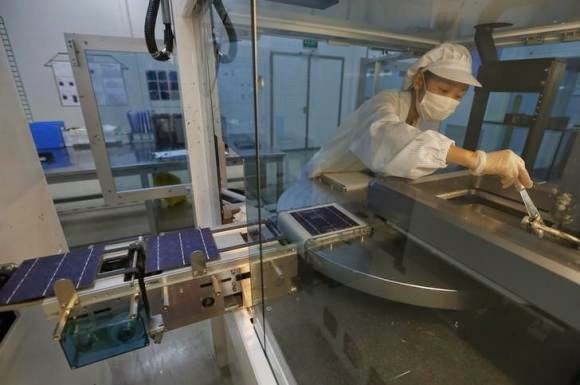
The U.S. Commerce Department on Friday placed anti-dumping duties as high as 165.05 percent on solar panels and cells from China after a preliminary finding that the products were being sold too cheaply in the U.S. market.

The move, which must still be confirmed, was the latest in a long-running solar industry trade spat between the world's two largest economies, and comes on top of anti-subsidy duties levied last month.

The U.S. side disregarded the facts in its decision, an unnamed Chinese commerce official from the trade remedies and investigations bureau said in a statement posted on the ministry's website.

"The frequent adoption of trade remedies cannot resolve the United States' solar industry development problems. We hope the United States can prudently handle this investigation, quickly end investigation procedures and create a good environment for competition in the global solar industry," the official said.

Trade friction is unavoidable, but governments have a responsibility to prevent it from harming China-U.S. relations, the official said.

"If escalating problems in the China-U.S. solar industry are ignored, in the end it will damage up and downstream industries in both countries."

The U.S. arm of German solar manufacturer SolarWorld AG is seeking to close a loophole allowing Chinese producers to sidestep duties imposed in 2012, complaining that Chinese manufacturers dodged those duties by shifting production of the cells used to make their panels to Taiwan.

Under Friday's preliminary ruling, Taiwanese producers also face anti-dumping duties of up to 44.18 percent.

But the Coalition for Affordable Solar Energy, which represents mainly installers, said the duties would hinder the deployment of clean energy by raising the prices of solar products and hurting consumers.

The solar industry has suffered in recent years from a glut of products from China, falling prices and a withdrawal of consumer subsidies in Europe, which have squeezed margins and spawned a rash of trade disputes.

U.S. imports of solar products from China were worth $1.5 billion in 2013, half the level of 2011, while imports from Taiwan more than doubled to $657 million over the period, according to U.S. data.

The U.S. Commerce Department will make its final decision by Dec. 15. The U.S. International Trade Commission is due to make a decision on whether the imports pose or threaten injury to U.S. producers by Jan. 29.

(GNN,Reuters,AIP)(Reporting by Michael Martina; Edited by Shri Navaratnam)

India's Jaiprakash to sell hydro plants to Reliance Power

#GNN - #India's Jaiprakash Power Ventures Ltd on Monday said it plans to reduce debt by selling three hydropower plants to a subsidiary of Reliance Power Ltd, including two plants involved in a sale that collapsed last week.

The sale of Jaiprakash's entire hydropower portfolio, which has an aggregate capacity of nearly 1,800 megawatts, would make Reliance the country's largest private provider of hydroelectric power.

Jaiprakash in a statement said it has entered into an exclusive memorandum of understanding with Reliance CleanGen Ltd, which with Reliance Power is part of billionaire Anil Ambani's Reliance Group Holdings Inc.

Jaiprakash did not disclose the terms of the sale.

The announcement followed the collapse last week of a plan by Jaiprakash and parent Jaiprakash Associates Ltd to sell two of the three plants for $1.6 billion to an Abu Dhabi-led consortium.

Representatives of Reliance Power could not immediately be reached for comment.

Shares of Jaiprakash Power were 5.2 percent higher in early Monday trade, compared with a flat benchmark index. Shares of Reliance were up 2.4 percent.

(GNN,Reuters,AIP)(Reporting by Tommy Wilkes; Editing by Christopher Cushing)

Tentative agreement reached on U.S. veterans' funding bill

#GNN - A tentative agreement has been reached by the chairmen of the U.S. Senate and House veterans committees on legislation aimed at resolving the Veterans Affairs healthcare crisis, their spokesmen said on Sunday.
Independent Senator Bernie Sanders, who heads the Senate Committee on Veterans' Affairs, and his House counterpart, Republican Representative Jeff Miller, will outline the agreement at a news conference at 1:30 p.m. on Monday, their spokesmen said.

"Miller and Sanders continued negotiations on a VA reform package this weekend and made significant progress toward an agreement on legislation to make VA more accountable and to help the department recruit more doctors, nurses and other healthcare professionals," their offices said in a statement.

The VA has been rocked by a scandal over cover-ups of months-long waiting times for medical appointments at its clinics and hospitals across the country. In Phoenix, doctors have alleged that some 40 veterans died as their names languished on secret waiting lists while officials misrepresented wait-time data to meet targets for bonus compensation.

The controversy led to the resignation of VA Secretary Eric Shinseki in late May.

With time winding down before Congress begins a five-week recess on Friday, pressure has been building to reach a deal on a measure aimed at eliminating long waiting lists at VA hospitals and clinics.

Negotiations on the measure had broken down last week as Sanders and Miller rolled out competing proposals with a $15 billion gap between them.

The proposal introduced by Sanders on Thursday would provide less than $25 billion in new funds for VA healthcare, with $3.3 billion offset by other savings in the department's budget.

Miller came back with a plan for $10 billion in emergency funds, with other budget needs to be settled in the fiscal 2015 VA spending bill later this year.

(GNN,ReutersAIP)(Reporting by Peter Cooney; Additional reporting by David Lawder; Editing by Andrea Ricci)

Upbeat #KSE further gains 188 points

#KARACHI: #Stock prices recorded further gains on Monday, as continuing bullish activity at Karachi Stock Exchange (KSE) pushed the benchmark KSE 100-share Index by 188 points to close at 30,413.
Investors actively participated in today trading, as the Index immediately after opening bell surged to 209 points.

According to stock market analysts, the State Bank of Pakistan’s decision to keep the policy rate unchanged appeared to have met the investors’ expectations. This provided oxygen to the positive trend, as traders continued to take fresh positions at various counters.


Hong Kong stocks open 0.13 percent higher

Hamas homemade rocket industry bypasses crumbling supply lines

(GNN) - Palestinian Hamas fighters once tried in vain to copy Israel's iconic submachine gun, the Uzi. Twenty years on, their homemade rockets streak more than 100 km (60 miles) from Gaza toward the northern Israeli city of Haifa.
At least 180 Palestinians have died in eight days of cross-border fighting between the guerrillas and the vastly stronger Israeli military. Israel has so far suffered one fatality, but this contrast in casualties has not detracted from Hamas's pride in its technical progress.

The variety and range of its rocket arsenal - both closely guarded secrets - have steadily improved since Hamas Islamists emerged as an underground militant group in 1987.

Ahmed Jaabari - the chief of Hamas's armed wing who was assassinated in an Israeli air strike in 2012 - masterminded the group's domestic manufacturing capability that helped allow it, analysts say, to keep launching salvoes at Israel despite the Israeli-Egyptian blockade on supplies to Gaza.

A commander in Hamas's armed wing told Reuters that before Jaabari rose to a higher military echelon in 1996, the group had only a small number of AK-47 rifles and a single rocket-propelled grenade.

"Jaabari upgraded Hamas's capability from a rifle to a rocket that hit Tel Aviv; this is in brief what he did," the commander, who declined to be identified, said.

In 2002 Jaabari succeeded the group's chief commander Salah Shehada, whom Israel killed, along with his aide and 15 other civilians, when it bombed a residential building in Gaza City.

Now, in the worst outbreak of Israeli-Palestinian violence in two years, Israel's military says it has hit Hamas's rocket launchers and storage facilities hard. It made similar statements in previous flareups, but rocket fire from Gaza has persisted, in varying degrees, over the years.

Engineers and fighters repeatedly died in attempts to build and launch the rockets.

Hamas gauged the range of its first homemade rocket, the Qassam, by firing it out to sea before listening to Israeli news alerts and receiving reports from Palestinian spotters inside Israel, Hamas sources told Reuters.

Thousands of Palestinians and hundreds of its fighters were killed in an uprising that culminated in Israel's evacuation of its soldiers and settlers from Gaza in 2005, and Hamas's seizure of the coastal Strip from Palestinian rivals two years later.

PRIDE

The Israeli-built and partially U.S.-funded Iron Dome defense system has shot many of the rockets destined for urban areas out of the sky.

But Hamas takes pride in their upgraded firepower and the political toll they say it takes on the enemy.

"What you are seeing today is not metal and power, what you see today is blood. Thousands of people paid with their lives so that we and our people can see this day - the day Israeli leaders stood before their nation to say: 'Sorry, Tel Aviv was hit'," the commander said, speaking before the latest conflict.

Hamza Abu Shanab, an expert on Islamist groups in Gaza, said Israel, which maintains a naval blockade of the territory and tight restrictions at its land border, faces a big problem.

"It cannot end Hamas rockets because Hamas does not depend on imported weapons and is making its own, so fighters may be engaged in combat and others are making them the ammunition," he said. "Israel cannot estimate the size of Hamas's arsenal because the tools are being made locally. So for every rocket fired, another ten are made."

Hamas and Islamic Jihad, another more militant armed faction, have announced new grades of longer-range rockets delivering heavier payloads in the latest conflict and boast of "surprises" from other, secret ordnance.

The Israeli military said on Monday it struck down a drone flying in its airspace which Hamas called the "Ababeel" and described as its first bomb-carrying unmanned aerial craft.

"(The armed groups) have unveiled new rockets and launchers that they have made themselves: a development that makes the militants less dependent on rockets that are smuggled into the Gaza Strip to threaten Israel's main population centers," according to Jane's Intelligence, a London-based consultancy.

Besides Israel's tighter curbs on Gaza-bound imports since Hamas took power there in 2007, Egypt has demolished hundreds of smuggling tunnels through which weapons and commercial goods had been brought. Hamas lost an important ally in the Egyptian Muslim Brotherhood, which was ousted by the military last year.

Relations with Iran, widely believed to be a main patron for Hamas's military wares, may also have suffered after Hamas refused to back Tehran's ally, President Bashar al-Assad, in Syria against mainly Islamist rebels.

The setbacks may not have dealt much of a blow to Gaza militancy, which remains a dear cause for local and Arab donors.

Reuven Ehrlich, an Israeli expert on militant groups, said Hamas's Arab donors help to launder money for the movement - cash that is prioritized for military uses despite Gaza's economic crisis.

"They are still getting money and the priority for the money they have is the military priority ... The money has no smell, nobody can control how the money flows," Ehrlich said.

(GNN)(Reuters)(AIP)(Writing by Noah Browning, Editing by Jeffrey Heller and David Stamp)